
Swiss engineering. A surface that drinks blood.
SGS Dental implants carry the SBTC® Smart Bioactive Trabecular Coating on every line, with platforms that keep your parts, drivers and kits simple.
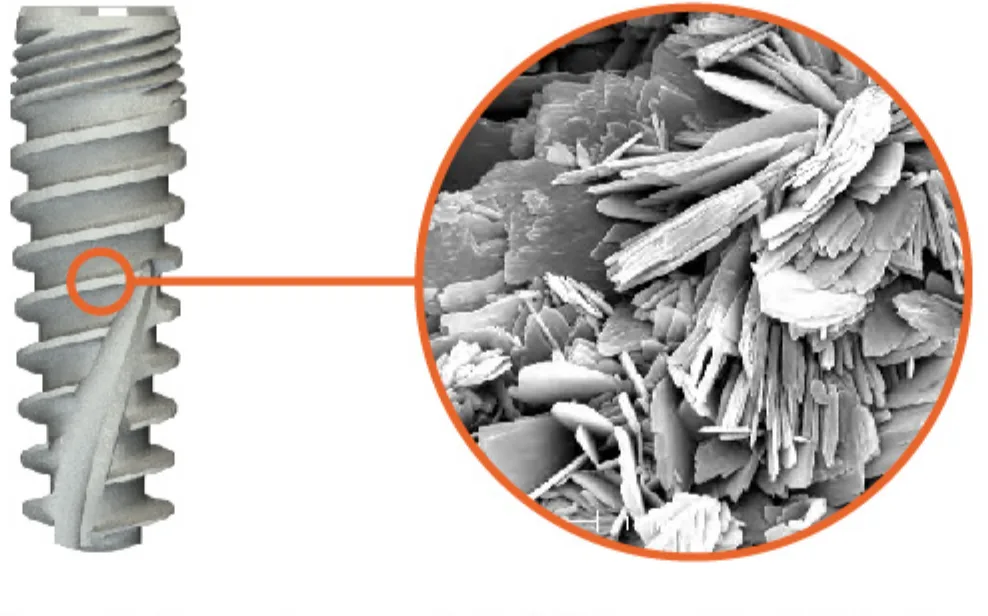
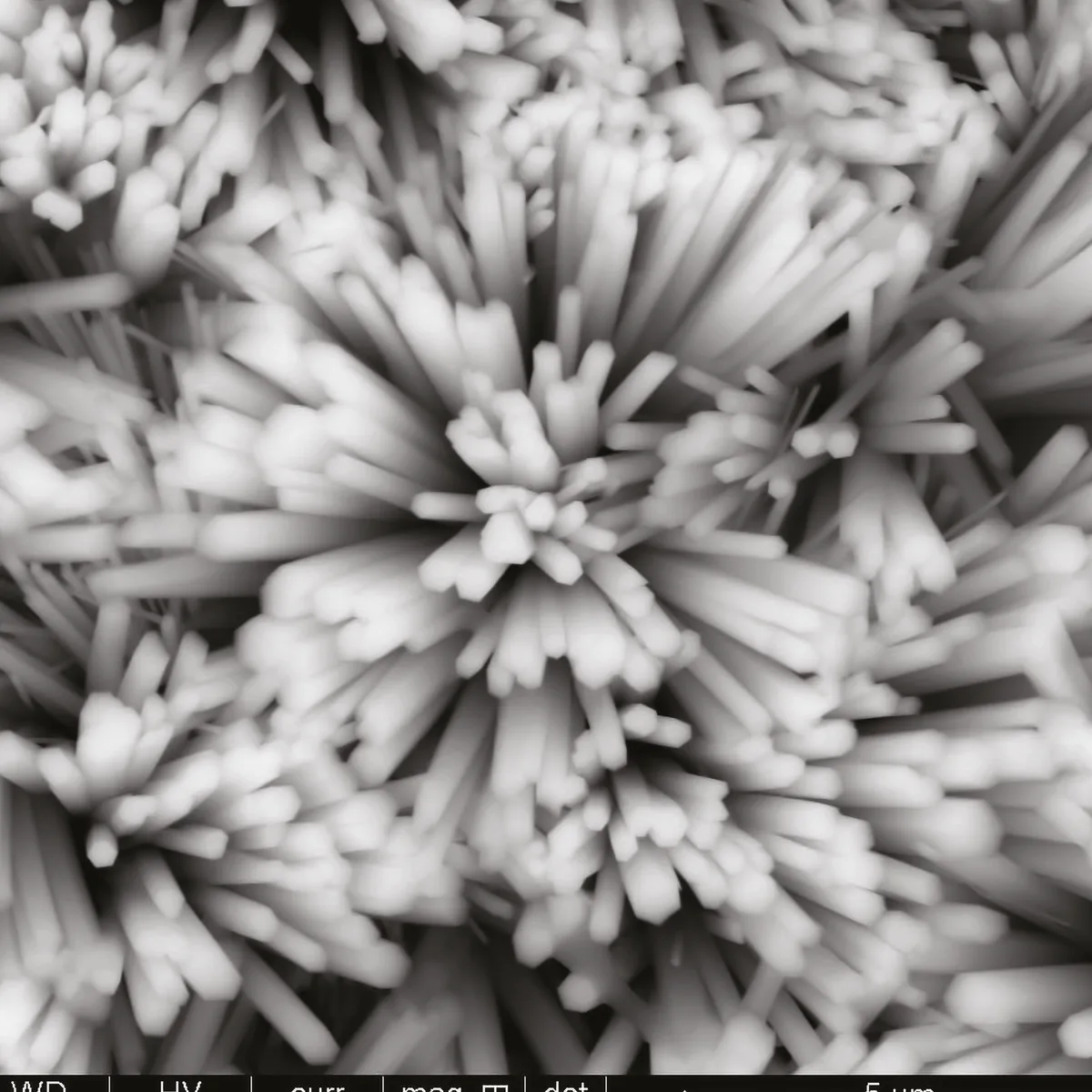
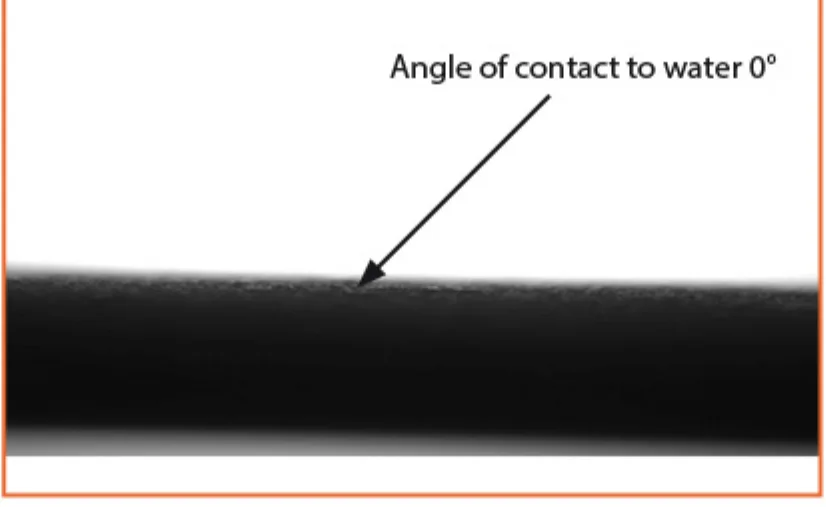
SBTC® (Smart Bioactive Trabecular Coating) is a thin calcium-phosphate coating, mostly brushite with hydroxyapatite, deposited electrochemically. It is strongly hydrophilic: blood wicks into the surface on contact. It resorbs over 6–12 weeks and is replaced by new bone.
Direct bone contact at 6 weeks, SBTC-coated vs uncoated TPS
Animal model (domestic pig maxilla). Significant difference.
of 156 SBTC-coated implants osseointegrated and functional after 6 months under immediate load
Multicenter study, 62 patients, 40 implants in fresh extraction sockets. These studies used SBTC-coated implants from another manufacturer (PITT-EASY, Oraltronics), not SGS Dental-branded implants.
Coating fully resorbs and is replaced by new bone
Per the SBTC® coating dossier. No particles or flaking, unlike plasma-sprayed HA.
Studies on the SBTC® surface
The Grande study: five surfaces, side by side
Daniel A. Grande, PhD, compared implant surfaces from Straumann (sandblasted, acid-etched), Zimmer Biomet (sandblasted, microgrooved), Nobel Biocare (anodized), BioHorizons (microgrooved, resorbable blast) and SGS Dental (calcium-phosphate coated). The SGS Dental surface significantly upregulated the bone markers ALPL and osteocalcin and directly drove stem-cell to osteoblast differentiation. The other surfaces mainly promoted angiogenesis.
Reported in an SGS Dental white paper (June 2024). The white paper does not give the study model, sample sizes or numeric results.
Antal et al. 2024: 2 years on P7D
A split-mouth randomized trial in 20 edentulous mandibles, all on P7D implants, compared SBTC® with an established calcium-phosphate coating. SBTC matched it, with 100% osseointegration and no complications, and showed a trend toward higher stability gain and less bone loss at 2 years. The differences were not statistically significant.
Head & Face Medicine 2024;20:24 · NCT06034171 · open access
Sources: SGS Dental, Coating Dossier SBTC®, Dental Applications (contact angle p.8, resorption p.10, animal data pp.17–18, clinical studies p.19); SGS Dental white paper, June 2024; Antal et al., Head & Face Medicine 2024. Coating and specification descriptions are SGS Dental company claims. Results from animal models and from other manufacturers' SBTC-coated implants may not predict results with SGS Dental implants. Use per the instructions for use.
See the surface.
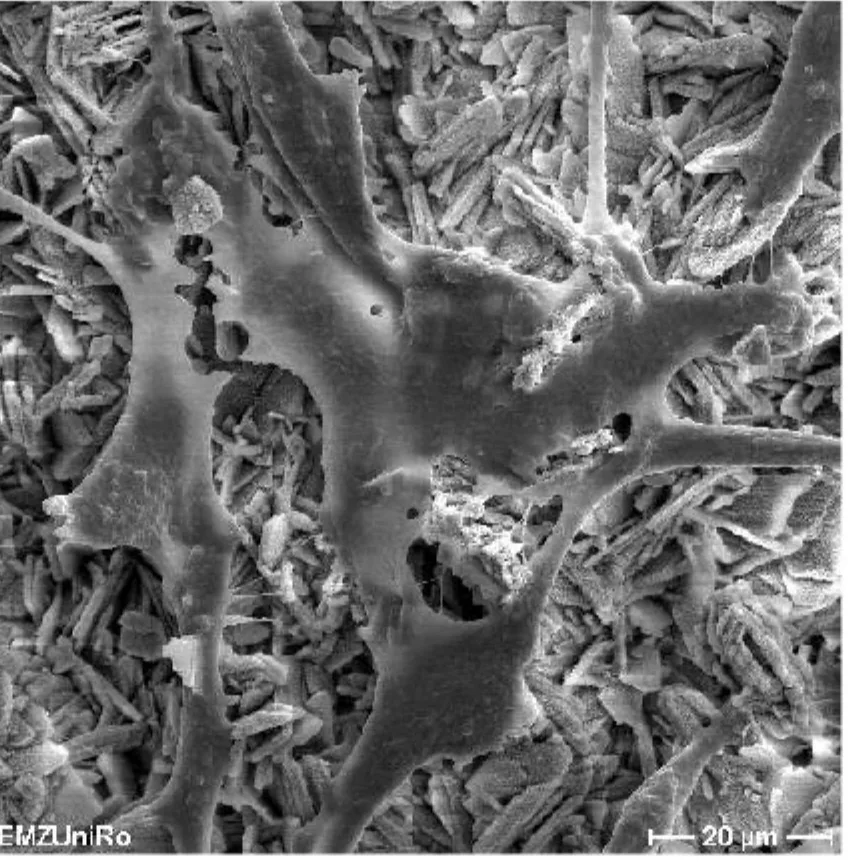
Footage and microscope images of the SBTC® Smart Bioactive Trabecular Coating on SGS Dental implants.
P5D bone level. P5G tissue level.
The same SBTC® surface and the same conical connection, so one set of parts restores both.
One conical platform
P5D, P5G, P7D and P1D share one conical, platform-switched connection. Choose bone or tissue level case by case without a second inventory.
A line for every bone
P1D and P1 for hard bone, P5D and P5G as all-rounders, P7D and P7 for soft bone, P7N for tight spaces and P7S / P9S one-piece down to Ø2.4 mm.
Digital-ready
Ti-bases, scan bodies and digital analogs for every platform, with official exocad and 3Shape libraries on our Downloads page.
Four connections. One set of parts for each.
Every SGS Dental implant on a connection uses the same prosthetics and the same drivers.
Less inventory
One shelf of healing caps, transfers and abutments covers P5D, P5G, P7D and P1D. No duplicate stock per implant line.
One kit
One driver set per connection, the same SKP prosthetic driver kit for all of them, and a surgical kit your assistant learns once.
Easy exchanges and swaps
Change implant line or size on the day without changing parts. Exchanges and size swaps are easy.
- 20 prosthetic part families
- 4 CAD/CAM bases
- K5D, K8D, K7 implant drivers & adapters
- 14 prosthetic part families
- 4 CAD/CAM bases
- K5N, K8N, K7N implant drivers & adapters
- 19 prosthetic part families
- 5 CAD/CAM bases
- K8, K7 implant drivers & adapters
- 4 prosthetic part families
- 1 CAD/CAM bases
- K6, K13 implant drivers & adapters
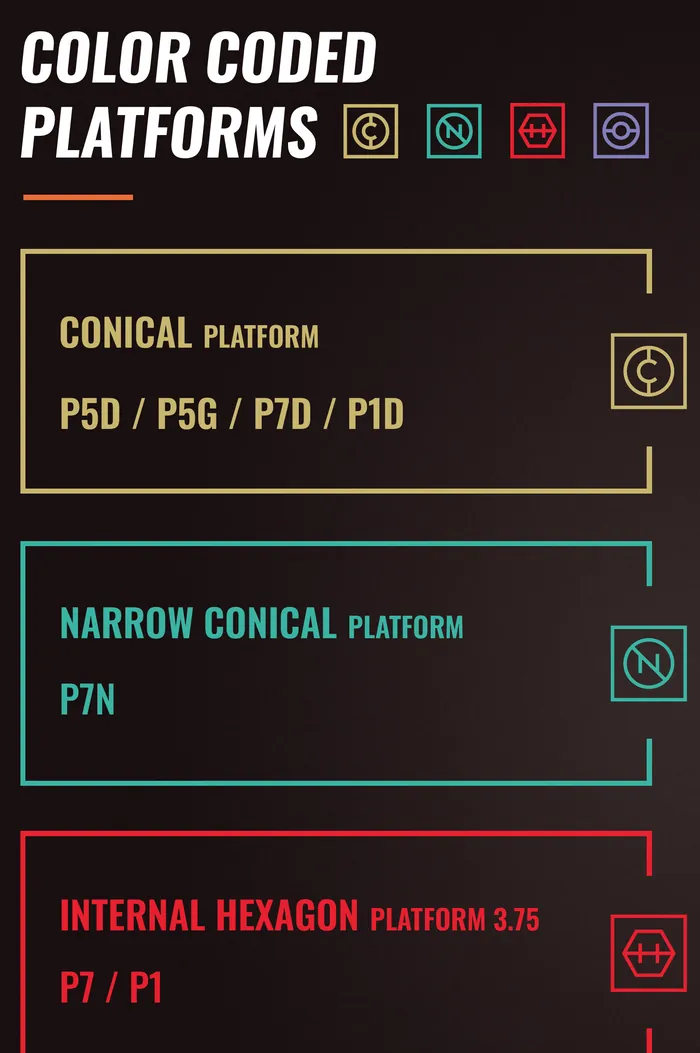
Know the connection at a glance.
SGS Dental color-codes each platform: Conical P5D / P5G / P7D / P1D, Narrow conical P7N and Internal hexagon, platform 3.75 P7 / P1. One-piece P7S / P9S carry their own S4 head.
Every implant on a platform takes the same parts and drivers.
SBTC® and SGS Dental, explained.
What is the SBTC® surface?
SBTC® (Smart Bioactive Trabecular Coating) is a thin calcium-phosphate coating, mostly brushite with hydroxyapatite, deposited electrochemically. It is strongly hydrophilic, with a 0° water contact angle, so blood wicks into the surface on contact. It resorbs over 6–12 weeks and is replaced by new bone.
Which SGS Dental implants have the SBTC® surface?
Every SGS Dental implant line: P5D, P5G, P7D, P1D, P7N, P1, P7, P7S and P9S.
How does the SGS Dental surface compare with other brands?
In the Grande study, Daniel A. Grande, PhD, compared surfaces from Straumann, Zimmer Biomet, Nobel Biocare, BioHorizons and SGS Dental. The SGS Dental calcium-phosphate surface significantly upregulated the bone markers ALPL and osteocalcin and drove stem-cell to osteoblast differentiation; the other surfaces mainly promoted angiogenesis. It is reported in an SGS Dental white paper (June 2024) that does not give the study model, sample sizes or numeric results.
Is there clinical data on SGS Dental implants?
Antal et al. (2024) ran a split-mouth randomized trial in 20 edentulous mandibles, all on P7D implants, comparing SBTC® with an established calcium-phosphate coating. SBTC® matched it with 100% osseointegration and no complications, and showed a trend toward higher stability gain and less bone loss at 2 years; the differences were not statistically significant.
Why does one conical platform matter?
P5D, P5G, P7D and P1D share one conical, platform-switched connection. You choose bone level or tissue level case by case without a second inventory, and one driver set and kit serve all four.
Prices are quoted privately.
Tell us the cases you have coming up. We'll send a private quote or a trial kit matched to your bone types and restorative workflow.